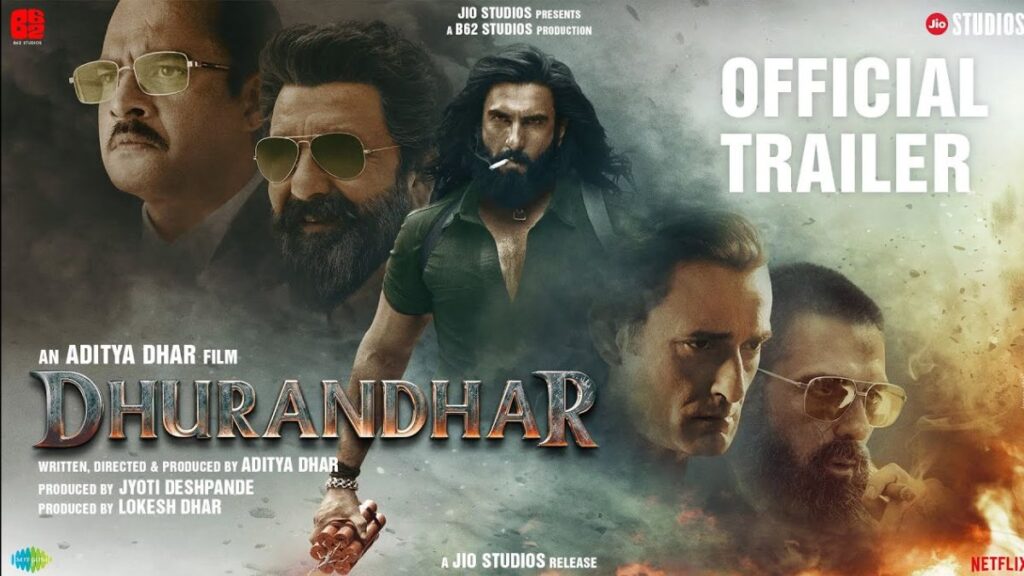
Dhurandhar
“Dhurandhar unfolds as a gritty action drama driven by strong performances and an intense narrative built around power, rivalry, and revenge. The film blends mass moments with emotional depth, offering sharp dialogues, solid character arcs, and a raw, energetic presentation. With its rugged tone and engaging pace, Dhurandhar delivers a satisfying watch for fans of action-packed storytelling.”
Table of Contents
ToggleDhurandhar: “Dhurandhar is a mass-loaded action drama where power, politics, and personal vengeance collide, delivering a loud commercial entertainer packed with attitude and intensity.”
A rugged hero rises against corruption, betrayal, and brutality to reclaim justice in pure mass style.
Dhurandhar Movie Review Rating:
Star Cast: Dhanveerrah / Pruthvi Ambaar / Arun Adith (depending on version)
Supporting cast includes Jabardasth artists, Vinay, Rohini, and others.
Director: Sandeep Benekal

What’s Good: Villain vs Hero confrontations are engaging
What’s Bad: Some emotional scenes feel stretched
Loo Break: First half mid portions (before interval block)
Watch or Not?: Watch if you enjoy rural mass films with action, hero elevation, and commercial elements.
Language: Hindi
Available On: Theatrical release
Runtime: 2 Hours 15 Minutes
User Rating Clickflik.in:
The story of Dhurandhar follows the journey of a sharp-minded and determined individual who rises from a modest background to a position of influence in a ruthless system. From the very beginning, the film establishes that this is not the story of a typical hero. The protagonist is observant, quiet, and strategic, someone who studies people before acting. His intelligence becomes his greatest weapon.
Set against a gritty social and political backdrop, the narrative explores a world where power is currency and loyalty is temporary. The protagonist starts as an outsider, navigating environments dominated by powerful figures who control systems through fear, money, and manipulation. Early events in the story shape his worldview, teaching him that survival requires adaptability and mental strength.
As the plot progresses, the protagonist begins to challenge the existing power structure—not through open rebellion, but through calculated moves. He builds alliances, earns trust, and slowly positions himself as a force to be reckoned with. Every decision he makes carries consequences, and the script carefully shows how each choice affects his relationships and reputation.
Parallel storylines introduce influential rivals, political figures, and power brokers who view the protagonist as both a threat and an opportunity. These characters are not merely obstacles; they represent different approaches to power—some rule through fear, others through charisma, and a few through legacy. His creates a layered conflict where confrontation is as much psychological as it is physical.
The emotional core of Dhurandhar lies in the personal sacrifices made along the journey. As the protagonist climbs higher, he becomes increasingly isolated. Relationships strain under the weight of ambition, and trust becomes a rare luxury. The film show’s how power reshapes identity, forcing the protagonist to confront who he is becoming.
The narrative builds steadily toward major confrontations that test not only physical strength but also mental resilience. Instead of relying solely on large-scale action, the story emphasizes tension, anticipation, and strategic planning. Climactic moments feel earned because they are rooted in character development rather than spectacle.
By the end, Dhurandhar presents a complete arc—one that questions whether true victory lies in dominance or in self-control. The story leaves the audience reflecting on the cost of ambition and the true meaning of strength.
 (No Ratings Yet)
 Loading...
Dhurandhar Movie Review: Script Analysis
From a screenplay perspective, Dhurandhar stands out for its intelligent and layered writing. The script avoid’s simplistic storytelling and instead focuses on gradual character evolution and power dynamics. Every scene is designed to either move the plot forward or deepen the audience’s understanding of the characters.
One of the strongest aspects of the script is its character-driven structure. The protagonist’s journey unfolds organically, with clear motivations guiding his actions. Rather than relying on sudden transformations, the script allows growth to happen gradually, making it believable and emotionally engaging.
The screenplay effectively balances strategy and emotion. Conversations often feel like battles of intellect, where words carry as much weight as weapons. Dialogues are sharp, controlled, and purposeful, reflecting the mindset of characters who are always calculating their next move. Silence is used effectively, allowing tension to build without unnecessary exposition.
Another notable strength is the portrayal of moral ambiguity. The script does not present the world in black and white. Characters operate in shades of grey, driven by survival, ambition, and circumstance. This complexity makes the narrative more realistic and mature, encouraging viewers to question traditional notions of heroism.
Pacing is deliberate but engaging. The first half focuses on world-building and character establishment, while the second half intensifies conflicts and consequences. Action sequences are strategically placed to enhance the narrative rather than dominate it. This ensures that the story remains engaging without feeling rushed or overwhelming.
Themes such as power, loyalty, betrayal, and identity are woven seamlessly into the screenplay. Instead of delivering direct messages, the script allows themes to emerge naturally through character actions and outcomes. This subtle approach adds depth and replay value to the film.
The script also excels in conflict design. Rivalries are built over time, making confrontations emotionally charged and narratively satisfying. The antagonist is not portrayed as evil for the sake of drama but as a formidable force with clear motivations, strengthening the central conflict.
Overall, the screenplay of Dhurandhar reflects thoughtful planning and disciplined storytelling. It respects the audience’s intelligence and rewards patience with a rich, immersive narrative. The writing successfully elevates the film from a standard action drama to a compelling character study rooted in realism.
Dhurandhar Movie Review: Star Performance
The success of Dhurandhar rests heavily on its performances, and the cast delivers with remarkable control and intensity. The lead actor anchors the film with a performance that is both restrained and powerful. Rather than relying on loud expressions or exaggerated heroics, he conveys authority through body language, eye contact, and silence.
His portrayal of the protagonist captures the internal conflict of a man balancing ambition with conscience. As the character evolves, subtle changes in posture, tone, and demeanor reflect his growing confidence and emotional distance. This layered performance adds credibility to the character’s transformation.
The antagonist delivers an equally compelling performance. Instead of playing a stereotypical villain, the actor brings depth, intelligence, and quiet menace to the role. His calm demeanor and controlled dialogue make him a formidable presence, turning every interaction with the protagonist into a tense psychological duel.
Supporting performances play a crucial role in enriching the narrative. Allies, rivals, and family members are portrayed with authenticity, each contributing meaningfully to the story. These characters feel lived-in rather than functional, adding realism to the world of Dhurandhar.
The chemistry between characters is particularly effective in confrontation scenes. Whether it’s verbal exchanges or silent stand-offs, performances maintain high tension without excessive dramatization. Emotional scenes are handled with restraint, ensuring that sentiment never feels forced.
The ensemble cast enhances the film’s realism. Each actor understands the tone of the film and performs accordingly, maintaining consistency throughout. This collective discipline strengthens the overall impact and prevents tonal imbalance.
What stands out most is the actors’ ability to convey complexity without exposition. Much of the storytelling happens through expressions and reactions, allowing the audience to interpret emotions organically. This performance-driven approach aligns perfectly with the film’s intelligent script.
In conclusion, the performances in Dhurandhar elevate the film significantly. The lead actor’s commanding presence, combined with strong supporting performances, ensures that the narrative remains engaging and emotionally grounded. Together, the cast brings depth, realism, and intensity to a story built on power and ambition.