
F1
“F1 delivers high-octane racing drama with unmatched speed, precision, and adrenaline, showcasing the world’s best drivers pushing the limits of technology and skill. Every race brings intense strategy, split-second decisions, and fierce rivalries that keep fans on the edge of their seats. With its global scale, stunning circuits, and thrilling unpredictability, F1 remains the pinnacle of motorsport entertainment.”
Table of Contents
ToggleF1 Movie Review: A high-adrenaline, visually gripping ride that captures the speed, strategy, and human emotion behind the world’s fastest motorsport.
A turbo-charged blend of racing intensity and raw drama that keeps you glued to every lap.
F1 Movie Review Rating:
Star Cast: Lewis Hamilton, Max Verstappen, Charles Leclerc, Fernando Alonso, Lando Norris, Carlos Sainz, Toto Wolff, Christian Horner
Director: James Gay-Rees / Box to Box Films style

What’s Good: High-speed action and tension
What’s Bad: Heavy focus on top teams (others get less footage)
Loo Break: During mid-season recap portions — rest is too exciting to miss.
Watch or Not?: Must Watch if you love racing, speed, sports drama, or adrenaline-filled storytelling.
Language: English
Available On: Netflix / Prime Video
Runtime: 1hr 50min
User Rating Clickflik.in:
F1 is a high-octane sports drama that pulls audiences straight into the glamorous yet brutally competitive world of Formula 1 racing. The story unfolds on and off the racetrack, capturing the speed, pressure, ambition, and emotional cost of life at over 300 km/h. More than just a racing film, F1 is a human story about redemption, teamwork, and the relentless pursuit of perfection.
The narrative centres on a seasoned former Formula 1 driver who returns to the sport after a prolonged absence from the grid. Once considered a prodigy, his career ended abruptly due to a combination of personal mistakes, internal power struggles within his team, and a devastating on-track incident. Now older, wiser, and carrying the weight of unfinished dreams, he is given one final opportunity to prove himself—not as a champion chasing trophies, but as a mentor guiding the next generation.
The story introduces a struggling F1 team battling poor results, limited funding, and internal conflicts. The team is rich in potential but lacks leadership and belief. He is where the protagonist steps in, taking on a dual role as both driver and guide. Alongside him is a young, fiercely talented rookie driver—raw, aggressive, and hungry for success but emotionally unprepared for the mental toll of Formula 1.
As the season progresses, the film takes viewers across iconic global circuits—from the dazzling night races to rain-soaked European tracks—each race serving as a chapter in the characters’ emotional journeys. The races are not just about podium finishes but about strategy, trust, and split-second decisions that can change lives forever.
Off the track, the script dives into the intense politics of Formula 1. Team principals clash, sponsors demand results, and media pressure threatens to tear the team apart. The veteran driver must confront his past, repair broken relationships, and face critics who believe he no longer belongs in the sport. Meanwhile, the rookie struggles with fame, expectations, and the fear of failure, creating a powerful mentor-student dynamic.
The emotional heart of F1 lies in its balance between spectacle and soul. Personal moments—quiet conversations in the garage, tense radio communications during races, and reflective late-night scenes—add depth to the characters. The film builds toward a climactic final race where everything is at stake: careers, reputations, and the very future of the team.
By the end, F1 delivers a satisfying blend of adrenaline and emotion. It reminds viewers that Formula 1 is not just about machines and speed, but about people who risk everything for milliseconds of glory.
 (No Ratings Yet)
 Loading...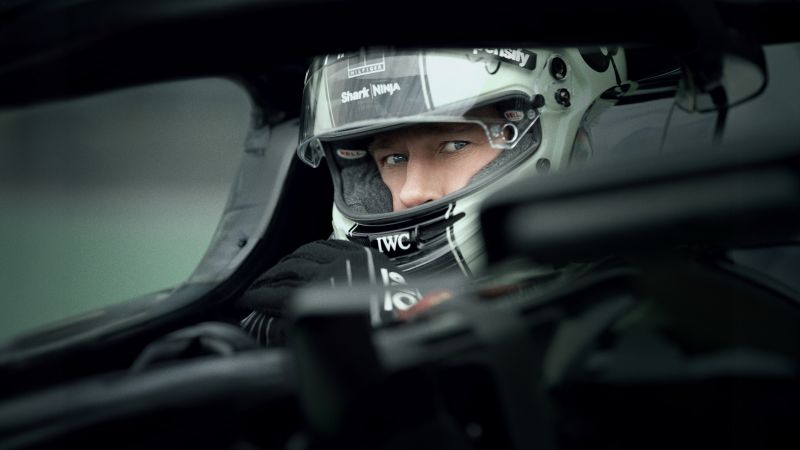
F1 Movie Review: Script Analysis
The script of F1 stands out because it successfully balances technical authenticity with emotional accessibility. While rooted deeply in the real-world mechanics of Formula 1, the story never alienates casual viewers. Instead, it uses racing as a backdrop to explore universal themes such as second chances, mentorship, resilience, and identity.
One of the script’s strongest elements is its character-driven approach. Rather than focusing solely on race outcomes, the narrative emphasises decision-making under pressure. Every race sequence is tied to an emotional arc—whether it’s the veteran confronting self-doubt or the rookie learning patience and discipline. He makes each lap feel meaningful rather than repetitive.
The screenplay smartly uses the structure of a racing season to pace the story. Early races establish conflict and tension, mid-season setbacks deepen character struggles, and the final races bring emotional and narrative resolution. This structure mirrors real Formula 1 seasons, making the progression feel natural and immersive.
Dialogue in F1 is crisp and realistic. Pit-wall conversations, radio communications, and media interactions feel authentic without becoming overly technical. The writers avoid heavy jargon, choosing instead to explain complex strategies visually or through emotional stakes. He keeps the script engaging for both hardcore motorsport fans and newcomers.
Another strength lies in how the script portrays the politics of Formula 1. Contracts, sponsorship pressure, internal rivalries, and media narratives all play crucial roles in shaping the story. These elements add realism and tension, showing that success in F1 depends as much on off-track decisions as on driving skill.
The mentor-rookie relationship is the emotional backbone of the script. Their dynamic evolves organically—from distrust and ego clashes to mutual respect and shared purpose. The veteran’s arc is particularly compelling, as he learns that legacy is not defined by trophies alone, but by the impact one leaves behind.
Visually, the script is designed for cinematic storytelling. Race scenes are written with clear emotional beats, allowing directors to focus on expressions, reactions, and consequences rather than just speed. He makes the action sequences emotionally charged, rather than purely spectacular.
The script also avoids clichés by grounding its inspirational moments in realism. Victories are earned, losses are painful, and not every problem has a perfect solution. This grounded tone gives F1 a mature and believable edge compared to typical sports dramas.
Overall, the script of F1 is well-structured, emotionally rich, and technically respectful of the sport. It succeeds in making Formula 1 feel both epic and personal, offering a narrative that resonates beyond the racetrack.
F1 Movie Review: Star Performance
The performances in F1 play a crucial role in elevating the film from a racing spectacle to a deeply human drama. The lead actor delivers a nuanced portrayal of a veteran Formula 1 driver burdened by regret, experience, and quiet determination. His performance is restrained yet powerful, capturing the inner conflict of a man fighting both time and memory.
What makes his portrayal stand out is the authenticity he brings to the role. From body language in the cockpit to subtle expressions during tense moments, the performance conveys years of racing experience and emotional scars. His interactions with the team feel natural, reflecting leadership earned through hardship rather than authority demanded.
The young rookie driver is equally impressive, bringing intensity, vulnerability, and raw energy to the screen. His performance captures the emotional rollercoaster of entering Formula 1—confidence bordering on arrogance, moments of fear, and the crushing weight of expectations. The actor successfully portrays growth, transforming from an impulsive talent into a disciplined racer by the film’s end.
The chemistry between the veteran and the rookie is one of the film’s highlights. Their scenes together are layered with tension, respect, and emotional depth. Whether arguing in the garage or sharing quiet moments before a race, their relationship feels genuine and earned.
Supporting performances also shine. The team principal is portrayed with authority and emotional complexity, balancing business realities with personal loyalty. Engineers, mechanics, and strategists are given meaningful moments, emphasising that Formula 1 is a team sport where every role matters.
The actors portraying journalists, sponsors, and rival drivers add realism to the world, enhancing the sense of pressure surrounding the protagonists. None of these roles feels exaggerated; instead, they reflect the real ecosystem of Formula 1.
What truly elevates the performances is the physical commitment shown by the cast. Driving sequences feel convincing, with actors displaying the physical strain and focus required at elite racing levels. Combined with immersive sound design and cinematography, these performances make the audience feel inside the cockpit.
Emotionally, the film avoids melodrama. Performances are grounded, allowing silence, looks, and pauses to convey meaning. This subtlety strengthens the film’s impact and makes key moments resonate more deeply.
In conclusion, the star performances in F1 bring authenticity, emotional depth, and credibility to the story. Each actor contributes meaningfully to the narrative, making the film not just a story about racing but a powerful portrayal of ambition, teamwork, and redemption.