“Jatadhara” is a raw and intense action-drama set against deep-rooted traditions and simmering village conflicts. The film follows a fierce, unyielding protagonist who confronts injustice with both heart and fire, leading to explosive mass moments and emotional depth. With its rustic setting, spiritual undertones, and gripping confrontations, “Jatadhara” delivers a commanding and immersive cinematic experience.
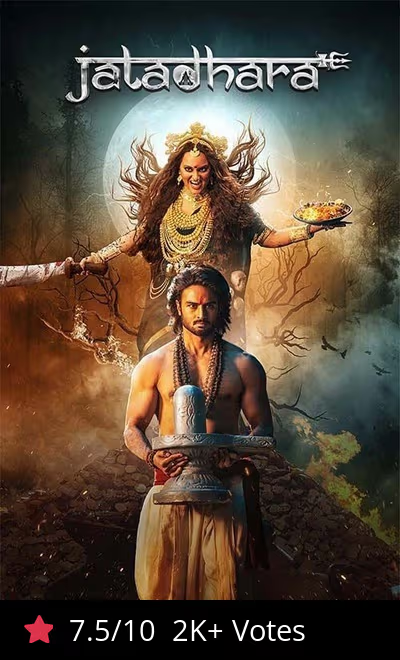
Table of Contents
ToggleJatadhara Movie Review: “Jatadhara” is a raw, high-octane action-drama where emotion, mass elevation, and spiritual intensity collide to deliver a powerful cinematic punch.
A fierce journey of a man who rises above chaos, destiny, and betrayal with unstoppable rage and devotion.
Jatadhara Movie Review Rating:
Star Cast: Sudheer Babu, Sonakshi Sinha, Divya Khossla, Shilpa Shirodkar
Director: Abhishek Jaiswal & Venkat Kalyan
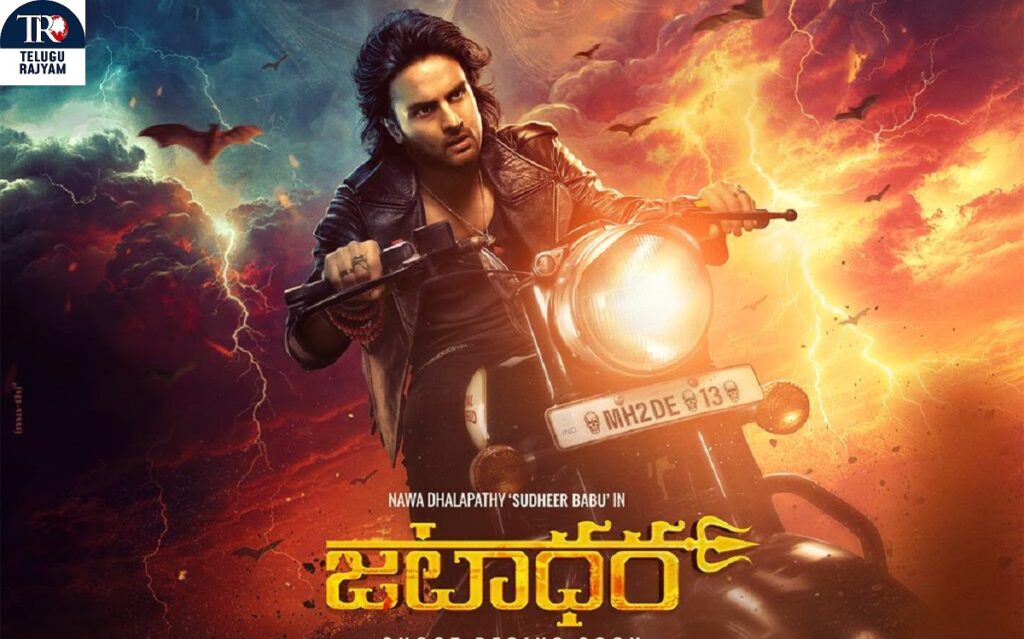
What’s Good: Strong emotional backbone
What’s Bad: A few stretched flashback segments
Loo Break: Mid-second-half slow family drama portions.
Watch or Not?: Yes – A must-watch for mass-action and emotional drama lovers.
Language: Telugu, Hindi
Available On: Theatrical release
Runtime: 2h 24m
User Rating Clickflik.in:
Rate This:
Jatadhara is a visually rich and concept-driven cinematic experience that blends mythology, spirituality, mystery, and human emotion into a powerful narrative. Deeply inspired by ancient traditions and belief systems, the film explores the unseen forces that shape human destiny and the eternal struggle between faith and ambition. With its dark, mystical tone and layered storytelling, Jatadhara stands apart as a film that dares to move beyond conventional commercial cinema.
Set in a world influenced by sacred rituals, ancient knowledge, and spiritual discipline, the story unfolds in an environment where the divine and the human coexist. The title Jatadhara symbolically represents ascetic strength, spiritual authority, and inner power—elements that are central to the film’s narrative. These themes are reflected not only in the characters but also in the setting, visuals, and overall atmosphere of the movie.
The film follows the journey of a central character whose life is deeply intertwined with spiritual forces and long-buried secrets. As the narrative progresses, layers of the past begin to surface, revealing hidden truths, moral conflicts, and emotional wounds. What begins as a mysterious setup gradually evolves into a deeper exploration of identity, purpose, and belief.
Rather than relying on fast-paced storytelling, Jatadhara takes a measured and immersive approach. The film allows its world to breathe, inviting viewers to absorb its symbolism, rituals, and emotional undertones. Every scene is designed to contribute to the larger narrative, whether through visual storytelling, silence, or carefully written dialogue.
One of the film’s most compelling aspects is its spiritual depth. Rituals, chants, sacred spaces, and mythological references are presented with respect and authenticity, creating an atmosphere that feels both ancient and relevant. These elements are not used merely for visual appeal but play a crucial role in driving the story forward and shaping the characters’ choices.
At its core, Jatadhara is also a deeply human story. Beneath the layers of mythology and mystery lies a narrative about struggle, sacrifice, and inner transformation. The film examines how belief can empower, protect, and sometimes consume individuals. It questions the fine line between devotion and obsession, authority and responsibility.
The emotional journey of the characters adds weight to the film’s spiritual themes. Relationships are portrayed with sensitivity, highlighting loyalty, fear, hope, and redemption. These emotional connections ground the film, making its larger-than-life themes feel relatable and impactful.
Visually, Jatadhara enhances its storytelling through atmospheric cinematography, symbolic imagery, and a carefully crafted colour palette. The settings—ranging from sacred landscapes to shadowy interiors—serve as extensions of the characters’ emotional and spiritual states.
Overall, Jatadhara is a film that invites viewers into a world of mystery, faith, and introspection. It is not just a story to be watched, but an experience to be felt and interpreted. For audiences who appreciate layered narratives, spiritual symbolism, and immersive cinema, Jatadhara offers a thought-provoking and memorable journey.

 (1 votes, average: 1.00 out of 5)
 Loading...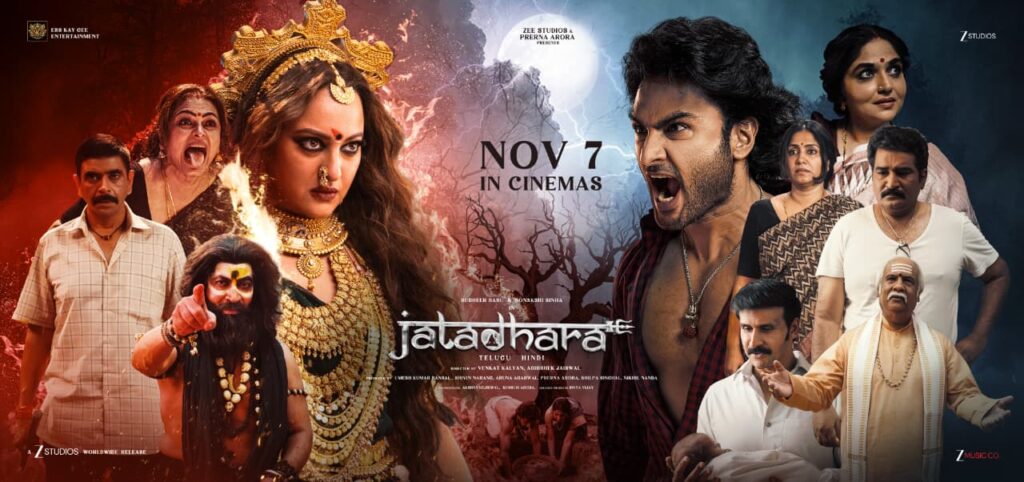
Jatadhara Movie Review: Script Analysis
The script of Jatadhara is built around faith and mythology, making it unique among mainstream films. It focuses on the idea that unseen forces influence human life and that spiritual balance must be protected.
The screenplay is layered, gradually revealing mysteries instead of explaining everything at once. This keeps the audience curious and engaged throughout the film.
One of the script’s biggest strengths is its symbolism. Sacred objects, rituals, and spiritual signs are used meaningfully, not just for visual appeal. They help connect the past with the present.
Dialogues are powerful and philosophical, but easy to understand. They highlight themes like destiny, belief, responsibility, and sacrifice.
Action scenes are story-driven. They are not random fights but meaningful confrontations that serve the larger narrative.
The pacing is steady. The film takes time to establish its spiritual world before moving into intense conflict. This helps the audience absorb the theme fully.
Music and background score play an important role in enhancing mystical and emotional moments. Chant-based music adds depth and intensity.
The climax is satisfying and spiritually uplifting rather than purely action-oriented. It reinforces the message of faith and righteousness.
Overall, the script of Jatadhara is thoughtful, spiritually rich, and engaging. It works well for audiences who enjoy mythology-based storytelling.
Jatadhara Movie Review: Star Performance
The performances in Jatadhara strongly support the film’s spiritual tone. The lead actor delivers a calm yet commanding performance, perfectly suited for a character rooted in faith and responsibility.
His body language, expressions, and dialogue delivery create a divine presence on screen. He balances action and spirituality effectively.
The antagonist delivers a strong and intense performance, making the conflict believable and powerful. His screen presence adds tension and depth to the story.
Supporting actors contribute well, especially those playing spiritual figures and villagers. Their performances add authenticity and emotional grounding.
Female characters bring emotional balance and strength, supporting the narrative without unnecessary drama.
Action sequences are performed convincingly, and emotional scenes are handled with restraint and maturity.
Overall, the performances in Jatadhara elevate the film and help convey its spiritual and mythological essence effectively.
Jatadhara is a spiritual action drama that offers mystery, devotion, and powerful storytelling.
Recommended for viewers who enjoy mythology, faith-based stories, and intense narratives.