
OTT Review: Ohmkar’s Mansion 24
“Ohmkar’s Mansion 24 delivers a mix of suspense, mystery, and supernatural tension, unfolding its story through eerie episodes and unsettling twists. The anthology-style structure keeps every tale fresh, while the chilling atmosphere and dramatic pacing maintain steady engagement. With its blend of spooky elements and emotional plots, Mansion 24 stands out as a solid, entertaining OTT thriller.”
Table of Contents
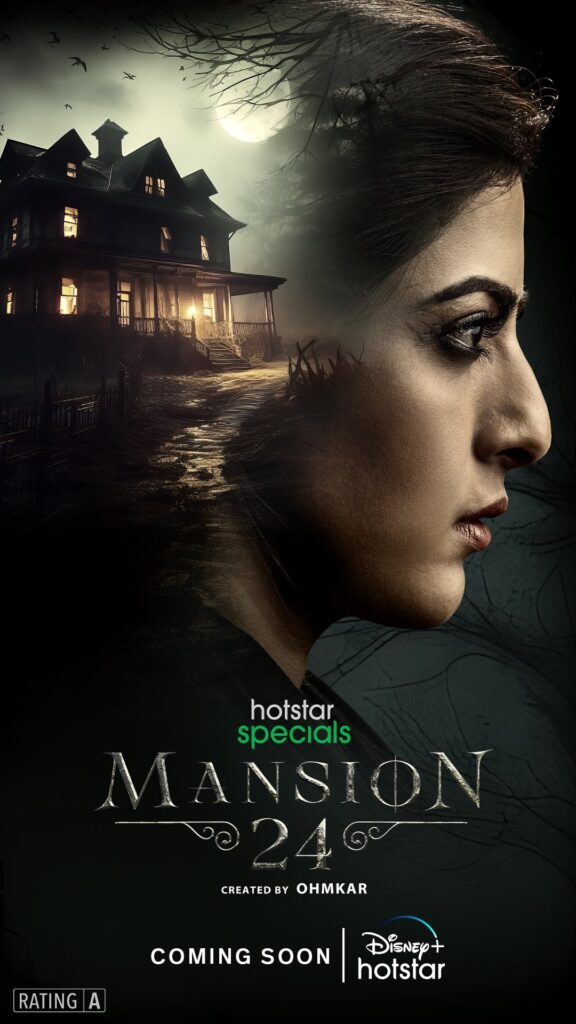
ToggleOTT Review Ohmkar’s Mansion 24: Mansion 24 is a horror-thriller web-series that attempts to deliver spine-chilling scares and suspense through a haunted mansion, but ends up being uneven — with better visuals than substance.
A daughter’s search for her missing father leads her into a spooky mansion full of twisted stories — where truth, fear, and mystery blur.
OTT Review Ohmkar’s Mansion 24 Rating:
Star Cast: Varalaxmi Sarathkumar, Rao Ramesh, Sathyaraj, along with supporting actors including Avika Gor, Nandu, and others.
Director: Ohmkar
Producer : Oak Entertainment (producers including Ashwin Babu & Kalyan Chakravarthy)
Release Date : 17 October 2023
What’s Good: A few subplots and moments (especially near the end) attempt to deliver mystery and thriller vibes, offering some entertainment value if you go with low expectations.
What’s Bad: Horror elements often feel flat or clichéd than scary; the scares come off more as typical genre tropes than truly haunting.
Loo Break: Possible: You might take a break after 2–3 episodes, especially if the pacing or horror-tension doesn’t grip you.
Watch or Not?: Watch only if: you like horror-thrillers that are light on commitment, enjoy atmospheric visuals, or want something to pass time.
Language: Telugu
Available On: Disney+ Hotstar
Runtime:
User Rating Clickflik.in:
Rate This :
Mansion 24 — A Deep Dive: Plot, Performances, Themes & Review
Mansion 24 is an Indian Telugu-language horror-thriller series directed by Ohmkar that premiered on Disney+ Hotstar on October 17, 2023. The show spans six episodes, combining supernatural elements with mystery and psychological intrigue. Though it promised a chilling journey into the unknown, critics and audiences have largely responded with mixed to negative reviews, praising select elements but criticising its execution and narrative depth.
Plot Overview
At its core, Mansion 24 tells the story of Amrutha, an investigative journalist determined to uncover the truth about her missing father, Kalidas. Kalidas was a renowned archaeologist who disappeared under mysterious circumstances and was branded a traitor, accused of fleeing the country with valuable ancient artefacts. With her mother in critical health and her father’s legacy in tatters, Amrutha embarks on a perilous quest to clear his name.
Her only lead points to the eerie, abandoned estate known as Mansion 24 — a place steeped in rumours of hauntings, where those who enter rarely return. Ignoring local warnings, she steps inside, ready to confront both supernatural and human secrets.
Inside the mansion, Amrutha meets the watchman, played by Rao Ramesh, who proves to be a key source of information. He recounts chilling tales linked to the mansion’s rooms, each reflecting a different story — from tragic love and betrayal to greed and guilt. These narratives form an anthology of horrors: interconnected yet distinct experiences that reveal more about the mansion’s lore than the central mystery at first.
Each episode delves into a separate subplot, featuring characters such as Writer Chaturvedi, Swapna, and an unnamed inmate, as well as others — all occupying numbered rooms whose stories contribute to the overarching mystery. In the final episodes, deep connections emerge, culminating in a twist reveal inside the ominous Room No. 24 that brings Amrutha closer to the truth about her father’s disappearance.
Characters & Performances
- Varalaxmi Sarathkumar (Amrutha): The lead performance anchors the series. Amrutha’s emotional journey — from grief to gritty determination — provides much of the show’s dramatic weight. While praised for her presence and intensity, some critics argue that her emotional depth and screen time could have been stronger.
- Rao Ramesh (Watchman): As the storyteller of the mansion’s eerie tales, Rao Ramesh brings gravitas and curiosity to a role that bridges reality and supernatural lore. However, many reviewers felt the character had limited development despite his importance.
- Supporting Cast: Actors such as Sathyaraj, Avika Gor, Nandu, Bindu Madhavi, Abhinaya, and Rajeev Kanakala contribute to the horror anthology with varied performances. While some segments stand out — particularly those with emotional resonance — others suffer from one-dimensional characterisation.
Themes & Narrative Structure
At first glance, Mansion 24 appears to be a standard haunted-house thriller. But under the surface, it tries to weave together themes of family legacy, betrayal, guilt, and redemption. The haunted mansion becomes a symbolic space — a repository of unresolved histories, past regrets, and secrets that refuse to stay buried.
Each episode functions almost like a short story, with the mansion as the common ground. These contained plots explore psychological horror: the idea that fear often arises not from ghosts alone but from repressed emotions, guilt, and paranoia. For Amrutha, the mansion challenges not only her belief in the supernatural but her understanding of truth and reality.
However, critics note that this anthology format results in a scattered narrative — one that at times feels more like a collection of unrelated tales than a cohesive whole. The central thread involving her father is strong at the beginning and end, but several middle subplots may appear tangential and disconnected.
Technical Execution
- Cinematography: The series offers visually striking frames and an atmospheric setting that effectively capture the mansion’s eerie vibe. The use of lighting and colour palettes contributes to the sense of dread and mystery.
- Music & Sound Design: Vikas Badisha’s background score enhances the chilling ambience, often heightening tension even where narrative elements lag.
- Visual Effects (VFX): A common point of criticism is the subpar CGI and visual effects. Several scenes — from ghostly apparitions to environmental embellishments — look artificial, detracting from the immersive experience and diminishing the horror impact.
- Editing & Pacing: The episodic structure offers variety but suffers from pacing issues. Some episodes feel drawn out, while others rush through potentially compelling moments without adequate buildup. The transitions between horror sequences and the main plot can feel uneven.
Critical & Audience Reception
Critics have been generally underwhelmed by Mansion 24, with reviews highlighting both strengths and significant weaknesses. The series has an IMDb rating reflecting mixed reactions, with praise for production design and concept balance but criticism for storytelling and originality.
Supportive critics appreciate the effort to innovate within a genre often dominated by clichés. They note that the series’s emotional core, grounded in Amrutha’s search for her father, is relatable and gives the narrative purpose.
However, the predominant narrative among reviewers is that the series fails to deliver genuine horror thrills. Predictable tropes, overused jump scares, and a lack of sustained suspense leave many viewers disappointed. Several reviews also highlight that, despite good performances, characters are often underdeveloped and serve mostly to move the plot forward rather than evoke empathy.
Final Verdict
Mansion 24 is a bold attempt at crafting a Telugu horror anthology with a layered mystery at its heart. It blends psychological intrigue with supernatural elements and attempts to touch upon family bonds and moral legacies. There is value here — particularly in its visuals, music, and central performance by Varalaxmi Sarathkumar.
But this potential is often overshadowed by uneven writing, overly familiar horror devices, and technical limitations. For fans of the genre seeking pure horror chills, the series may feel underwhelming. For those interested in character-driven anthology narratives, there are moments that resonate — especially in the contrasting stories within each room of Mansion 24.
In short, Mansion 24 raises intriguing questions and delivers atmospheric visuals but ultimately falls short of being the terrifying, cohesive horror experience it aspires to be.
 (No Ratings Yet)
 Loading...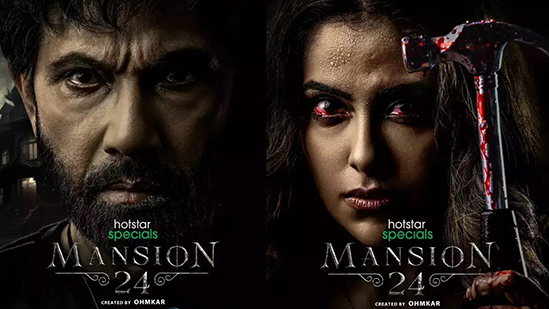
OTT Review Ohmkar’s Mansion 24: Script Analysis
The script of Ohmkar’s Mansion 24 aims to blend supernatural horror, mystery, and emotional drama within a limited-episode web-series format. Designed as a haunted-house narrative with an anthology structure, the writing attempts to explore fear not just through ghosts, but through human guilt, trauma, and unresolved pasts. While the concept is ambitious, the script delivers a mixed cinematic experience, succeeding in atmosphere and intent but struggling with cohesion and narrative depth.
Core Concept and Narrative Foundation
At the heart of Mansion 24 lies a strong foundational idea — a mysterious mansion with multiple rooms, each holding a different story, all tied together by a central investigation. The script smartly positions the mansion as a character in itself, not merely a location. Each room functions as a narrative container, revealing human flaws like greed, obsession, betrayal, and fear.
The central storyline follows Amrutha, an investigative journalist searching for the truth behind her father’s disappearance and disgrace. This emotional hook gives the script its backbone. The personal motivation grounds the supernatural elements, preventing the story from becoming a collection of random horror tales. On paper, this dual structure — a main investigation plus episodic horror stories — is a compelling idea.
However, execution becomes the script’s biggest challenge.
Anthology Structure: Strengths and Weaknesses
The script adopts an episodic anthology format, where each episode introduces new characters and conflicts connected to different rooms in the mansion. While this allows variety in tone and storytelling, it also creates discontinuity. Several subplots feel detached from the main narrative, making viewers question their relevance until much later.
Some room stories are emotionally effective and thematically rich, while others feel underwritten and predictable. This inconsistency weakens the overall impact. Instead of escalating tension episode by episode, the script often resets emotional engagement, forcing the audience to repeatedly reconnect with new characters.
A tighter script could have interwoven these stories more organically with Amrutha’s journey, allowing each room to reveal a clue or emotional revelation directly linked to her father’s mystery.
Character Writing and Development
Amrutha’s character arc is the strongest aspect of the script. She is written as determined, emotionally wounded, and morally driven. Her scepticism toward the supernatural, combined with her journalistic instincts, makes her a believable entry point for the audience. However, the script sometimes limits her agency, making her more of an observer than an active driver of events within the mansion.
The watchman character functions as a narrative bridge — a storyteller guiding both Amrutha and the audience. While conceptually interesting, his character lacks depth. The script uses him more as an exposition tool than a fully realised person, which reduces emotional investment.
Supporting characters introduced in individual episodes often suffer from thin characterisation. Many are defined by a single trait — fear, greed, love, or regret — without sufficient backstory. This makes their tragic outcomes predictable and less impactful.
Horror Writing and Scare Mechanics
From a script perspective, Mansion 24 relies heavily on atmospheric horror rather than psychological buildup. The writing often sets up eerie situations effectively, but resolves them too quickly. Several horror moments depend on familiar tropes like sudden appearances, eerie sounds, and shadowy figures rather than sustained suspense.
The script misses opportunities to explore slow-burn horror, where fear emerges gradually through character behaviour, dialogue, and emotional tension. Instead, many scenes rush toward a scare, sacrificing emotional resonance.
That said, the idea of linking horror to human sins and emotional baggage is well-conceived. The script suggests that ghosts are manifestations of unresolved guilt and trauma, which adds thematic depth, even if not fully explored.
Dialogue and Screenwriting Choices
Dialogue in Mansion 24 is functional but rarely memorable. Conversations often exist to move the plot forward rather than reveal character psychology. Emotional moments are sometimes explained rather than shown, weakening their impact.
The script occasionally leans too much on verbal exposition, especially when explaining the mansion’s history or supernatural rules. A more visual and subtle approach could have strengthened immersion and suspense.
On a positive note, the investigative dialogue involving Amrutha is engaging and realistic, reinforcing her professional background and emotional urgency.
Pacing and Narrative Flow
Pacing is one of the script’s biggest weaknesses. Some episodes feel stretched, while others rush through crucial revelations. The balance between horror sequences and emotional storytelling is uneven, leading to tonal inconsistency.
The script struggles with escalation. Instead of building toward a steadily intensifying climax, it delivers isolated peaks of tension. This makes the final reveal feel less impactful than it should be, despite its narrative significance.
A more refined script structure — with clearer narrative beats and escalating stakes — could have significantly improved engagement.
Themes and Symbolism
Thematically, Mansion 24 explores truth versus reputation, unresolved trauma, and the burden of legacy. The mansion symbolises suppressed histories and forgotten crimes, making it a metaphor for societal and personal denial.
Amrutha’s quest represents the fight against false narratives and inherited shame. This thematic layer gives the script emotional weight and relevance beyond horror.
Unfortunately, these themes are often implied rather than deeply examined. The script touches on powerful ideas but rarely allows them to fully unfold through character arcs or narrative consequences.
Climax and Resolution
The final episodes attempt to tie together the anthology threads and reveal the truth behind Amrutha’s father and Room No. 24. While the intent is satisfying, the execution feels rushed and emotionally restrained. The script resolves mysteries quickly without allowing the audience to process their significance.
A longer or more detailed climax could have elevated the emotional payoff and justified the slow buildup of earlier episodes.
Overall Script Verdict
From a scriptwriting perspective, Mansion 24 is conceptually strong but structurally uneven. It shows ambition, thematic depth, and an interesting narrative design, but lacks the polish required for a truly gripping horror experience.
The script succeeds in atmosphere and intent but falters in pacing, character depth, and cohesion. With tighter writing, stronger character arcs, and more integrated storytelling, Mansion 24 could have been a standout horror series.
As it stands, the script feels like a promising blueprint that needs more refinement before execution.
OTT Review Ohmkar’s Mansion 24: Star Performance
The success of a horror-thriller series like Mansion 24 depends heavily on its performances. Since fear, mystery, and emotional tension cannot rely on visuals alone, the actors must convincingly sell both the supernatural elements and the emotional core of the narrative. In Mansion 24, the cast features a strong lineup of experienced performers, and while the series struggles in writing and pacing, the actors manage to deliver performances that add credibility and weight to the storytelling.
Varalaxmi Sarathkumar as Amrutha
Varalaxmi Sarathkumar shoulders the responsibility of the series as Amrutha, an investigative journalist driven by the desire to uncover the truth behind her father’s mysterious disappearance. Her performance is the emotional backbone of Mansion 24, providing consistency in a narrative that often shifts focus between episodic stories.
Varalaxmi portrays Amrutha with a restrained intensity. She avoids melodrama and instead relies on subtle expressions and controlled body language. Her eyes often convey confusion, anger, and grief without excessive dialogue, which works well for a character navigating a haunted space filled with unanswered questions.
One of her strengths lies in maintaining emotional continuity across episodes. Even when the script sidelines her during anthology segments, Varalaxmi ensures that Amrutha’s presence remains impactful whenever she returns to the foreground. Her scenes involving her father’s legacy and her mother’s illness carry genuine emotional weight.
However, the performance is limited by the script. At times, Amrutha is written more as an observer than an active participant, restricting Varalaxmi’s scope to react rather than drive action. Despite this, she brings dignity and conviction to the role, making Amrutha a believable and sympathetic protagonist.
Rao Ramesh as the Watchman
Rao Ramesh plays the mysterious watchman of Mansion 24, a character that acts as a narrative guide and emotional anchor. Known for his commanding screen presence, Rao Ramesh uses his voice modulation and measured dialogue delivery to create intrigue.
His performance carries a sense of familiarity and unease. He speaks as someone who knows the mansion’s secrets but chooses to reveal them selectively. This layered portrayal adds depth to what could have easily been a one-note role.
The watchman’s calm demeanour contrasts effectively with the horror unfolding around him, making him both comforting and suspicious. Rao Ramesh excels in moments of silence, allowing pauses and expressions to suggest hidden truths.
However, the character is underwritten, and despite Rao Ramesh’s effort, the role does not evolve significantly. The actor does what he can within the limitations, delivering a solid performance that feels incomplete due to insufficient character development.
Avika Gor
Avika Gor appears in one of the anthology segments, and her performance stands out for its emotional sincerity. She brings vulnerability and realism to her character, making the audience connect with her fear and desperation.
Avika’s strength lies in portraying psychological distress without exaggeration. Her reactions feel organic, which enhances the horror experience. She manages to humanise the supernatural threat by grounding it in emotional pain.
Though her screen time is limited, Avika leaves a strong impression, proving once again that she can handle complex emotional roles effectively.
Sathyaraj
Veteran actor Sathyaraj adds gravitas to the series with his commanding presence. His role is brief but impactful, lending credibility to the storyline. Sathyaraj’s natural authority and expressive dialogue delivery elevate the scenes he appears in.
Even with a limited scope, he manages to leave a lasting impression, reminding audiences of the value experienced actors bring to ensemble narratives.
Bindu Madhavi
Bindu Madhavi delivers a restrained and grounded performance. She avoids theatrical expressions and focuses on realism, which suits the tone of her character. Her portrayal adds emotional depth to the subplot she is part of, making it more relatable.
Her strength lies in subtle acting choices, especially in moments of internal conflict. However, like many supporting characters, her arc is limited by the script’s episodic nature.
Nandu, Abhinaya & Rajeev Kanakala
Actors like Nandu, Abhinaya, and Rajeev Kanakala contribute effectively to the series, each bringing sincerity to their respective roles. Their performances vary in impact depending on the strength of their episode’s writing.
Abhinaya, in particular, shines in emotionally charged moments, using expressions and body language effectively. Rajeev Kanakala brings familiarity and reliability, grounding his scenes with natural dialogue delivery.
Nandu handles his role with controlled intensity, adding tension to his segment. However, none of these performances are allowed to fully flourish due to limited screen time and rushed conclusions.
Collective Performance and Chemistry
As an ensemble, the cast of Mansion 24 performs competently. There is a noticeable effort to maintain tonal consistency across episodes despite different characters and stories. The actors succeed in making the mansion feel inhabited by real people with real emotions, which is essential for a horror narrative.
However, the lack of interaction between key characters limits chemistry. Since many performances exist in isolated segments, the emotional connections do not carry over strongly between episodes.
Performance vs Script Limitations
One of the recurring issues in Mansion 24 is the gap between actor potential and script execution. Several actors demonstrate capability and screen presence, but the writing does not always support deeper exploration.
Performances often feel like strong efforts trapped within weak structures. Emotional arcs begin promisingly but conclude abruptly, leaving the audience wanting more depth and resolution.
Final Performance Verdict
The star performances in Mansion 24 are among the series’ strongest assets. Varalaxmi Sarathkumar delivers a committed and emotionally grounded lead performance, while Rao Ramesh adds intrigue and stability. Supporting actors like Avika Gor, Sathyaraj, and Abhinaya elevate individual episodes through sincere acting.
While the series may falter in storytelling and pacing, the cast’s dedication ensures that Mansion 24 remains watchable. The performances inject life into an otherwise uneven narrative and prove that with a stronger script, this ensemble could have delivered something truly memorable.